Does India’s Rafale Deal Reshape The Russia-India Partnership and Regional Balance?
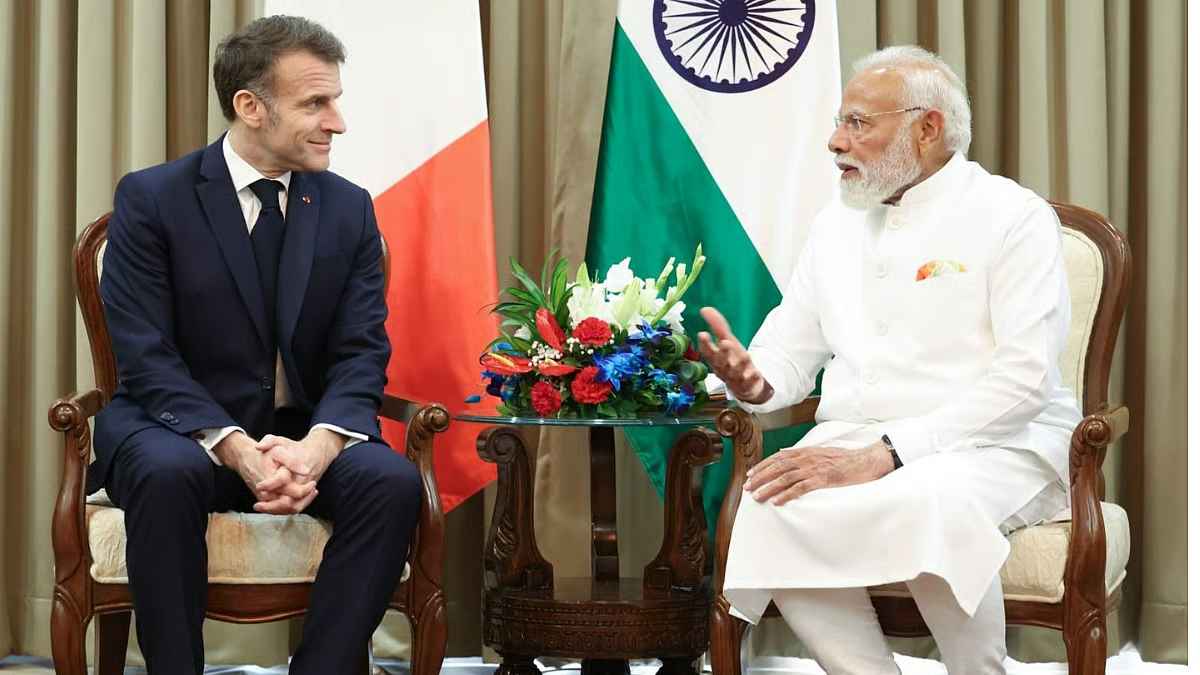
On February 12th, India’s Ministry of Defense approved the purchase of 114 Rafale fighter jets and several missiles from France at a cost of around 40 billion dollars. Described as a “contract of the century,” this deal follows India’s earlier purchase of 26 Rafale jets and will make India the largest holder of French-made fighter jets outside France. During Macron’s three-day visit to India, both countries emphasized that they were reshaping their ties into a “special global strategic partnership”. Macron later expressed satisfaction with the strengthening of relations through the Rafale deal and hoped it would expand to include French submarines. However, India has long maintained close ties with Russia, since the Cold War, India has been a major importer of Russian arms and has depended on Russian military equipment, as well as crude oil and coal in recent years. The Rafale deal raises the question of whether India is distancing itself from Russia or simply diversifying its arms suppliers to maintain regional balance. This article argues that the deal does not signal a break with Russia but reflects India’s effort to balance major powers in a multipolar world.
Historical Depth of India-Russia Partnership
Russia–India relations began soon after India gained independence in 1947. India’s first purchases of Soviet weapons took place in the 1950s, including Mi-4 helicopters, An-12 transport aircraft, and M-160 mortars, which met the needs of India’s military following its conflict with Pakistan in 1947 and later tensions with China. After losing the war to China in 1962 and facing another conflict with Pakistan, India felt increasingly threatened and insecure, which led to a deepening of its relations with the Soviet Union and the acquisition of more Soviet arms.
Another factor that strengthened Russia–India relations was the support the United States and several European countries provided to Pakistan. By 1961, Pakistan was already using supersonic jets supplied by the United States, which pushed India to seek the purchase of the Soviet MiG-21 supersonic jet. Relations between India and the Soviet Union improved further because of the advantages India gained from this partnership. While Western countries politically supported Pakistan, offered arms to India at high interest rates with 10-year loan terms, and were unwilling to grant production licenses for domestic manufacturing, the Soviet Union proved to be a more reliable partner. It was ready to sell arms at lower interest rates with 15-year loan terms and agreed to provide production licenses. As a result, India became heavily equipped with Soviet guns, tanks, helicopters, jets, and submarines.
By 2022, about 90% of India’s army equipment was of Russian origin. From AK-47 rifles to tanks, anti-tank systems, and air defense systems, the Indian Army has been heavily dependent on Russia. Around 40% of the Indian Navy’s equipment is Russian, and nearly 90% of the Indian Air Force consists of equipment of Russian origin. The Air Force is particularly equipped with Russian helicopters, missiles, and Sukhoi Su-30MKI fighter jets. In the last two decades, approximately 65% of India’s arms imports have come from Russia.Furthermore, Russia–India relations deepened after the Ukraine war. As Europe sanctioned Russian oil and reduced its dependence on it, India benefited from discounted Russian oil. Although Russian crude oil previously accounted for only around 2% of India’s imports, by the end of 2023 it had risen to about 40%. India largely replaced European consumers in purchasing Russian oil. India also did not condemn the invasion of Ukraine, which further strengthened its relations with Russia. Built over decades on mutual trust and support, Russia–India relations have remained strong, with Russia standing by India in times of need, making their partnership particularly significant.
Defense Diversification
India has been attempting to diversify its defense procurement for decades. It has made several deals with the United States, France, Israel, and the United Kingdom. However, since Russia offered more favorable benefits, India continued to rely heavily on Russian arms. The risks of this overdependence became more evident after the Ukraine war. Russia has been increasingly in need of its own weapons and has faced difficulties in fulfilling its export obligations, leading to delays in arms deliveries. For example, Russia has been unable to deliver the S-400 defense system to India and has exceeded the original delivery timeline by more than three years. Western sanctions have also made Russian exports more difficult. Moreover, Russia’s growing closeness with China has caused concern in India, especially given their recurring border disputes. Russia’s stronger ties with China and China’s influence over Russia raise concerns that Russia could be hesitant to supply arms to India in the event of a China–India conflict. As a result, India has sought to reduce its reliance on Russia as a single supplier and diversify its defense procurement by turning to Western partners. India had already purchased 36 Rafale jets, and the new 114-jet deal further supports its effort to diversify and reduce vulnerabilities amid rising tensions with China and Pakistan. Under this agreement, 90 Rafale jets are expected to be jointly produced in India, while the rest will be delivered directly. The deal aligns with India’s goal of strengthening domestic production under the “Made in India” initiative. However, some aspects of the agreement remain unclear, particularly India’s request for access to the Rafale source code, which France appears willing to co-produce but not fully share.
Regional Balance
India has been in conflict with China and Pakistan for decades and views both countries as security threats, which has made India feel increasingly insecure. The recent four-day conflict between India and Pakistan in May 2025 demonstrated to India the urgent need to strengthen its air force and air defense capabilities. At the same time, China has been developing its military at a very rapid pace, and India is falling behind and to balance this growing power gap, India is seeking to acquire Rafale jets from France. Currently, India faces a shortage of fighter jets. The Indian Air Force is authorized to maintain a minimum of 42 fighter squadrons, with each squadron consisting of 12 to 18 fighter jets. However, as older aircraft such as the MiG-21 are being retired, India now operates only 30 to 32 squadrons. This shortfall needs to be addressed quickly as India cannot fill the gap solely with domestically produced jets, as their production rate is slow and they are not as capable as the Rafale jets in meeting operational requirements.
In conclusion, as this Rafael jet deal can have a shift from one single supplier, Russia, toward Western countries, it does not directly mean that India is realigning itself with the West as the India-Russia relations are historical and deeply rooted. Like other countries, India is seeking to secure the best possible deals and diversify its defense equipment in order to avoid dependence on a single supplier, which could place India in a vulnerable position if that supplier faces difficulties. India’s purchase of Russian oil in a huge amount and refusing to condemn Russia for its Ukraine invasion despite a backlash of Western countries indicates a strong friendship between two countries. Also this purchase can reshape the power balance in the region. Improving India’s influence and power and being a deterrence for the next India-China or India-Pakistan war.
Source:
Shanthie M.(February 25, 2026).Weaning India Away From Russia? Take a Leaf from the French Playbook.The Diplomat:
++https://thediplomat.com/2026/02/weaning-india-away-from-russia-take-a-leaf-from-the-french-playbook/++
Mahima K.(February 17, 2026).France’s Macron in India to boost Rafael deal talks, AI ties.
DW:++https://www.dw.com/en/france-macron-visits-india-rafale-deal-ai/a-75998082++
Rajaram P.(February 21, 2026). Macron’s visit to India: Major Takeaways-Analysis. Eurasiareview:
++https://www.eurasiareview.com/21022026-macrons-visit-to-india-major-takeaways-analysis/++
The Moscow Time(February 11, 2025). Russia struggles to Keep India dependent on its arms supplies:
Tina D, Vasabjit B, and Amanda S.(August 22, 2025). Guns and Oil: Continuity and Change in Russia-India Relations. CSIS:
++https://www.csis.org/analysis/guns-and-oil-continuity-and-change-russia-india-relations++
Christophe J. and Aadil S.(July 5,2022). Indian Military Dependence on Russia. Institut Montaigne:
++https://www.institutmontaigne.org/en/expressions/indian-military-dependence-russia++
Rajat P.(April 23, 2024). India is the 4th largest military spender after US, China, Russia, but gaps remain. TimesofIndia:
Tahir Q.(February 24, 2026). France to give 114 Rafael jets to India, but not the source code; Same old story playing again?India.com:
Shilpa J.(February 19, 2026). India to make Rafael jets with France in boost to defense ties. Reuters:
Vaibhav R.(February 18, 2026). Monthly analysis of Russian fossil fuel exports and sanctions. CREA:
Center for Preventive Action(February 18, 2026). Conflict Between India and Pakistan. CFR:
++https://www.cfr.org/global-conflict-tracker/conflict/conflict-between-india-and-pakistan++
Daniel M. and David B.(April 25, 2025). Friends with Limits: The Future of Russo-Indian Defense Ties. War on the Rocks:
++https://warontherocks.com/2025/04/friends-with-limits-the-future-of-russo-indian-defense-ties/++
France 24(January 27, 2025). India boosts domestics arms industry and looks West to pare back Russia reliance:
Krishn K.(January 29, 2024). India pivots away from Russian arms, but will retain strong ties
TRT World(June 30, 2025). Russia delays S-400 delivery to India by 3 years:report:
++https://www.trtworld.com/article/1ad1d971eb18++
Anjana P.(February 13,2026). India clears the way for a landmark deal to acquire French Rafale jets. DefenseNews:
You may also like
The World Is Not Multipolar (Yet)
China’s rise is reshaping the balance of power, but the United States still holds the advantages needed to remain the system’s dominant pole.
Read Article →U.S.–China Trade War Under The Second Trump Administration
Trump’s tariff policies have turned the U.S.–China trade dispute into a broader geopolitical struggle over economic power, global influence, and international leadership.
Read Article →Fransa Protestoları:Kemer Sıkma Politikalarının Anlık ve Doğal Bir Sonucu mu Yoksa Küresel Sistematik Kırılmanın bir Göstergesi mi?
Fransa’da yaşanan bu süreç tek bir ülkenin iç meselesi olmaktan çıkmış,küresel sistemdeki derin çatlakları su yüzüne çıkarmıştır.
Read Article →