The World Is Not Multipolar (Yet)
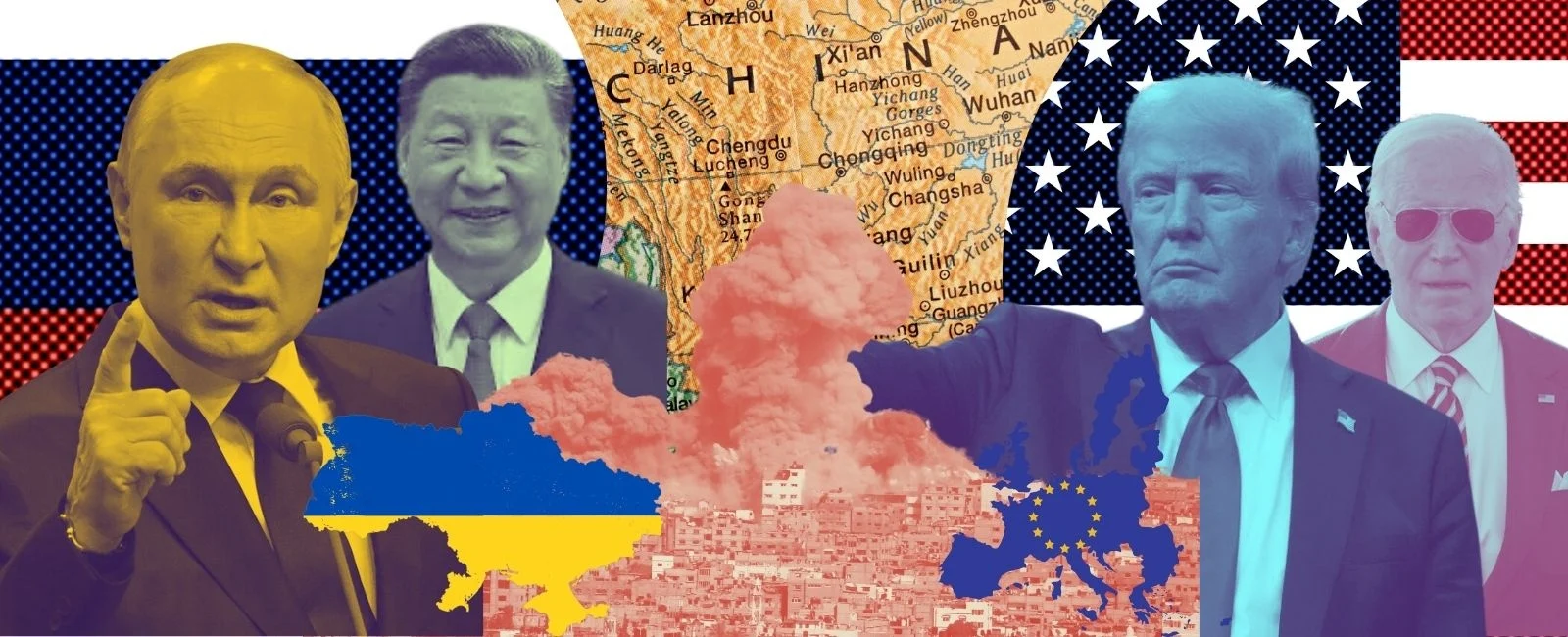
Since the 1990s, there has been little doubt about the United States’ dominance over the international system, as no country possesses comparable resources and capabilities to challenge its global influence and power. After the USSR collapsed in 1991, which was a counter-bloc against the United States and divided the world into two competing poles, the United States emerged as the sole superpower of the world. This unipolar position gave Washington freedom of action to achieve its objectives and interests, promote its liberal economy and democratic ideas across the world, and intervene in Afghanistan and Iraq in the name of the War on Terror.
However, with the rise of China as the second-largest economy in the world, being advanced in tech, semiconductor production, rare earth minerals, electric cars, and global projects such as the Belt and Road Initiative, the assumption that the world is going to remain unipolar was challenged. At the same time, the growing influence of middle powers such as India, Brazil, Turkey, Japan, Saudi Arabia, and South Africa, as they are starting to gain influence regionally and becoming more important, is assuring the shift of power from superpowers to middle powers. Furthermore, the expansion of BRICS+ and its efforts to challenge the United States’ influence by reducing dependence on the dollar in the international system are leading some scholars to argue that these are signs that the world has moved away from unipolarity.
One thing is true: power is more distributed across the international system than it was after the Cold War. The United States’ power has declined, and it no longer has the same scale of power it once did, while other states have strengthened economically and militarily. However, it is too early to characterize the world as multipolar. The United States remains the only pole of the international system with incomparable military and economic power, alliance networks, overseas bases, financial power, reserve-currency advantage, and international influence that is not matched by any other state. Thus, the main question is not whether the United States’ dominance has declined, but whether any other country has acquired enough power to constitute a pole.
What makes a Pole?
To judge whether the world is unipolar, bipolar, or multipolar, we have to understand what it takes to create a pole in the international system and what the relevant characteristics are.
Polarity in international relations refers to the presence of one or more powers shaping the international system. To create a pole, one has to have major economic size, military power, alliances, political power and global reach to shape the global system. Unipolarity refers to the system where one state dominates the globe. The post-Cold War period provides the clearest example of unipolarity, as the collapse of the USSR left the United States as the sole superpower with the capabilities to shape the international system. Bipolarity refers to the system in which two states dominate the international system and possess approximately equal capacities. The Cold War represents an example of such a system, when the United States and USSR created two poles in the world, one dominating the Western bloc and the other the Eastern bloc and maintaining a big network of alliances. Multipolarity happens when power is distributed among three or more major powers rather than concentrated in one or two. Multipolarity is linked to the period from the 1750s until 1945, when states such as Prussia, England, France, and Russia had very powerful militaries and navies and had almost the same global influence.
China: the closest contender
If we look at the current dynamics of the international system and particularly to the arguments made by skeptics of unipolarity, the first contender against the United States for creating a pole is China. It is undeniable that China has been rising rapidly and its economic power is one of the main factors that makes it a potential competitor of the United States. China’s GDP was over $19 trillion dollars while the United State’s GDP is over $30 trillion dollars as of 2025. Although China’s economy is enormous, there is a huge gap between the two countries. This difference becomes even more apparent when GDP per capita is considered: China’s GDP per capita stood at $13,862, while the United States’ was $90,000. The gap is also evident in military expenditure. As of 2024, the United States spends 3.4% of its GDP on military spending, equaling an estimated $1trillion. In comparison China allocated 1.7% of its GDP, an approximate of $318billion.
For the system to be bipolar, there have to be two superpowers with almost equal power dominating the world. The ability to dominate the globe requires some indicators such as military and economic power, alliance networks, overseas bases, ideological reach, cultural influence and technological power. The United States has one of the biggest defence alliances, starting with NATO, one of the biggest and most important defence alliances, and extends to a lot of other treaties such as the Southeast Asia Treaty, the Japanese Treaty, the Rio Treaty, and other bilateral pacts. In contrast, China has no formal alliances except North Korea, as China follows a partnership policy instead of alignment. China’s alignment with Russia could create a stronger counterweight to the United States, however, it has not developed into a formal alliance because of the historical concerns thus China’s help to Russia has remained limited in its Ukraine war. The extensive alliance network helps the United States maintain bases all around the world to keep its projection of power, protect its interests, and have global reach and influence. It operates over 750 bases, while China keeps limited overseas bases in Djibouti, Cambodia, and three island bases.
China is a founding member of BRICS+, a bloc that has since expanded and is often presented as a challenge to United States dominance. In practice, however, it is too divided to act as a counterweight to the American alliance network. Egypt and Ethiopia have long been in dispute over the Nile dam, and India and China have an unresolved border conflict. Russia and China also compete for influence within the group. India’s Chief Economic Advisor has even stated that India has no intention of replacing the dollar as the world’s reserve currency when he was asked in 2025 if India was looking at an alternative currency to the US dollar. For these reasons, BRICS cannot yet project power effectively.
The United States also benefits from the global reach of its currency, which remains a key source of economic influence. As of the first quarter of 2026, the dollar accounts for about 57% of official foreign exchange reserves, while the yuan holds only about 2%.
In ideology and culture, the United States is also ahead. Since the end of the Second World War, it has promoted liberal democratic principles as a core part of its foreign policy. Over time, these ideas have gained wide international reach, and many countries have adopted elements of liberal democratic institutions. American cultural influence has spread just as widely: Hollywood, food, fashion, and music have become powerful tools of appeal.
China, however, has become a serious competitor in technology. It produced nearly 75% of the world’s electric cars in 2025 and accounted for about 85% of global solar module production as of 2024. This lead comes from industrial scale, state backing, and a large population. Yet the United States remains ahead at the innovation frontier, with exceptional strength in frontier AI, advanced computing, chip design, cloud computing, and commercial space. China, in short, leads in manufacturing, while the United States leads in innovation. If the creation of a new pole requires another superpower with the capacity to exercise global dominance, no country currently comes close to the United States in terms of its overall power and ability to exert influence on a global scale.
Rising Powers
The closest to creating a pole is China. Its economy is rising , trying to create its own pole of influence by founding BRICS+ platform even though its very divided, and is a leader in some sections of technology. But the United States still leads in military power, alliances, overseas bases, financial reach, political and cultural influence and frontier technology. China is a rising contender, not yet a second pole.
The world does not look multipolar either. The countries that could rank third, Russia and India, are far behind the United States. Russia has the world’s largest nuclear arsenal, but its economy, at about $2.5 trillion, is roughly one-twelfth the size of America’s, and its military spending, about $190 billion in 2025, is a fraction of the United States’ $954 billion. India’s economy is growing quickly, but its GDP, at just over $4 trillion, and its military spending, about $92 billion, remain well behind both China and the United States. Some argue that the European Union could be a third pole as a bloc. Its combined economy is large, but it lacks a unified military and foreign policy. Other middle powers, such as Brazil, Turkey, Japan, Saudi Arabia, and South Africa, have significant economic, military, and political influence in their regions. But none of them can project power globally or form a third pole.
The United States remains the only pole of the world, but of course we can not deny that its power and influence have declined since the Cold War. The rise of China, especially economically and technologically, demonstrates how the distribution of power is gradually changing. The tariff dispute between the United States and China last year provided an example of this shift. When the United States sought to impose tariffs on Chinese goods, China responded with counter-tariffs and restrictions on the export of rare earth materials, which are important for a range of industries. These measures demonstrated that China possesses sources of economic leverage that can impose costs on the United States and influence its policy choices. The subsequent negotiations, which resulted in the reduction of some tariffs, further illustrated China’s growing ability to challenge U.S. economic pressure and pursue its interests through its own sources of leverage. Similarly, India’s continued purchase of Russian oil despite Washington’s pressure not to do so demonstrates that even major countries that want to be the United States’ ally still want to keep their strategic autonomy.
Even though the world may be going away from unipolarity, which shaped the world in the post-Cold War international system, that does not mean that the multipolar world is already emerging or any sooner. There is still a huge gap in power and influence between the United States and other countries. And no other country has the capacity and dominating power to create another pole. The international system, therefore, appears to be experiencing a process of relative decline of the United States and the diffusion of power rather than an immediate transition to multipolarity.
Jamshed Safaraliev
Sources:
Brooks, S. G., & Wohlforth, W. C. (2023, May/June). The myth of multipolarity: American power’s staying power. Foreign Affairs, 102(3). ++https://www.foreignaffairs.com/united-states/china-multipolarity-myth++
Funaiole, M. P., & Hart, B. (2025, September 2). China’s military in 10 charts. Center for Strategic and International Studies. ++https://www.csis.org/analysis/chinas-military-10-charts++
International Monetary Fund (2026, July 1). IMF Data Brief: Currency composition of official foreign exchange reserves. IMF. ++https://data.imf.org/en/news/imf%20data%20brief%20july%201++
Hussein, M., & Haddad, M. (2021, September 10). Infographic: US military presence around the world. Al Jazeera. ++https://www.aljazeera.com/news/2021/9/10/infographic-us-military-presence-around-the-world-interactive++
International Energy Agency. (2026). Global EV outlook 2026. ++https://www.iea.org/reports/global-ev-outlook-2026++
Asia News Network (2025, September 11). Is India looking at an alternative to US dollar? An emphatic ‘no’ from New Delhi. Asia News Network. ++https://asianews.network/is-india-looking-at-an-alternative-to-us-dollar-an-emphatic-no-from-new-delhi/++
Peters, M. A. (2022, December 5). The emerging multipolar world order: A preliminary analysis. Educational Philosophy and Theory, 55(14), 1653–1663. ++https://doi.org/10.1080/00131857.2022.2151896++
Statista Research Department. (2026, March 2). Annual solar photovoltaic module production globally from 2000 to 2024 (in megawatts) Statista. ++https://www.statista.com/statistics/668764/annual-solar-module-manufacturing-globally/++
Tizzard, D. A. (2017, October 30). American unipolarity: The uneven distribution of power. Global Politics Review, 3(2), 10–25. ++https://www.globalpoliticsreview.com/publications/2464-9929_v03_i02_p010.pdf++
U.S. Department of State. (n.d.). Collective defense arrangements
++https://2009-2017.state.gov/s/l/treaty/collectivedefense/++
World Bank. GDP (current US$) — China. World Bank Open Data. ++https://data.worldbank.org/indicator/NY.GDP.MKTP.CD?locations=CN++
World Bank. GDP per capita (current US$) — United States . World Bank Open Data.
++https://data.worldbank.org/indicator/NY.GDP.PCAP.CD?locations=US++
You may also like
Does India’s Rafale Deal Reshape The Russia-India Partnership and Regional Balance?
India’s Rafale deal with France reflects a strategy of diversifying defense partnerships
Read Article →U.S.–China Trade War Under The Second Trump Administration
Trump’s tariff policies have turned the U.S.–China trade dispute into a broader geopolitical struggle over economic power, global influence, and international leadership.
Read Article →Fransa Protestoları:Kemer Sıkma Politikalarının Anlık ve Doğal Bir Sonucu mu Yoksa Küresel Sistematik Kırılmanın bir Göstergesi mi?
Fransa’da yaşanan bu süreç tek bir ülkenin iç meselesi olmaktan çıkmış,küresel sistemdeki derin çatlakları su yüzüne çıkarmıştır.
Read Article →